

Faculty of Engineering and Physical Sciences

University of Southampton

This project is no longer listed on FindAPhD.com and may not be available.

Click here to search FindAPhD.com for PhD studentship opportunities

  EngD-12 Theoretical methods to predict open rotor tone noise (Rolls-Royce plc)

Dr M. Kingan, Dr Alan McAlpine  No more applications being accepted

About the Project

Applications are invited for a 4-year doctoral studentship working on aircraft noise research.

The studentship is offered in the Industry Doctoral Training Centre (IDTC) at the University of Southampton to a highly qualified candidate working towards an Engineering Doctorate (EngD) in the general area of ‘Transport and the Environment’. The project is sponsored by Rolls-Royce plc and will be supervised within the Rolls-Royce University Technology Centre (UTC) in Gas Turbine Noise at the Institute of Sound and Vibration Research (ISVR) at the University of Southampton. The successful applicant will join a strong team of researchers at the UTC and at Rolls-Royce Derby working in this area.

Reducing the environmental impact of civil aviation is critical to the growth of air transport and to the future of the aircraft industry. Ambitious environmental goals for the industry have been set by the Advisory Council for Aeronautics Research in Europe (ACARE). These include a 10dB EPNL reduction in noise at take-off and approach for new aircraft entering service in 2020, compared to a datum 2000 level. Work undertaken in this project will focus on the achievement of such goals.

In this project, Rolls-Royce seeks to develop theoretical methods for predicting tone noise produced by advanced open rotor aircraft engines. Also assessment of installation effects is required, when the engine is installed on the airframe. The project will mainly involve theoretical work (mathematical analysis) and some computational work. Candidates should be UK nationals, or EU nationals with at least 3 years residency in the UK. A generous stipend is provided which supplements standard EPSRC doctoral rates with an additional allowance which increases as the programme proceeds. The studentship commences in September 2013 or earlier by agreement. Applications are invited now.

If you wish to discuss any details of the project informally, please contact Dr Alan McAlpine, ISVR, Email: [Email Address Removed], Tel: +44 (0) 2380 59 2667.

Start dates: 1 February 2013 and 26 September 2013
Closing date for applications: 15 April 2013

Funding Notes

This EngD project will be funded through the Industry Doctoral Training Centre (IDTC) http://www.southampton.ac.uk/idtc. The studentship comprises support from both EPRSC http://www.epsrc.ac.uk and an industrial sponsor.

To be eligible students need to have UK status or be a European Union (EU) national who has been 'ordinarily resident' in the UK for three years prior to the commencement of studies.

Enquiries: [Email Address Removed]

Where will I study?

Faculty of Engineering and Physical Sciences

Make your mark at the leading edge of science and engineering research. At the University of Southampton’s Faculty of Engineering and Physical Sciences, we’re studying stars as they explode, inscribing the human genome into crystals, shaping the future of human interaction with AI, helping build brighter liveable cities, and using chemistry for sustainable manufacturing. We’re looking for innovators, critical thinkers and curious minds to join us in driving new discoveries, with real opportunities for impact through our links with industry and governments and our enterprise initiatives. In return you’ll benefit from multi-million-pound research facilities, the expertise of leading specialists and a supportive, inclusive research community.

Why study at the Faculty of Engineering and Physical Sciences?

96% of our research environment, which includes our facilities, resources and expertise, is rated world-leading or internationally excellent (REF 2021), placing us in a globally competitive position.

Fully funded programmes available in defence and security, sustainability and quantum engineering – offered through our specialist Centres for Doctoral Training.

Advance your entrepreneurial ambitions through Future Worlds, our on-campus accelerator.

Work with highly regarded researchers, including 36 Fellows of the UK’s prestigious Royal Society and the Royal Academy of Engineering.

Make a difference in a faculty that focuses on real-world change, recognised by three Queen Elizabeth Prizes for Education – the highest UK state honours for excellence, innovation and impact.

Over 800

postgraduate students

202

PhDs

Over 96%

of our research is rated either world-leading or internationally excellent (REF 2021)

Southampton  United Kingdom

main campus

About the Faculty of Engineering and Physical Sciences

The Faculty of Engineering and Physical Sciences is home to around 40% of the University of Southampton’s postgraduate researchers, putting you at the heart of a dynamic, diverse research environment. Here you’ll join a community of brilliant minds who are finding solutions to global problems across engineering, chemistry, physics, photonics and computer science.

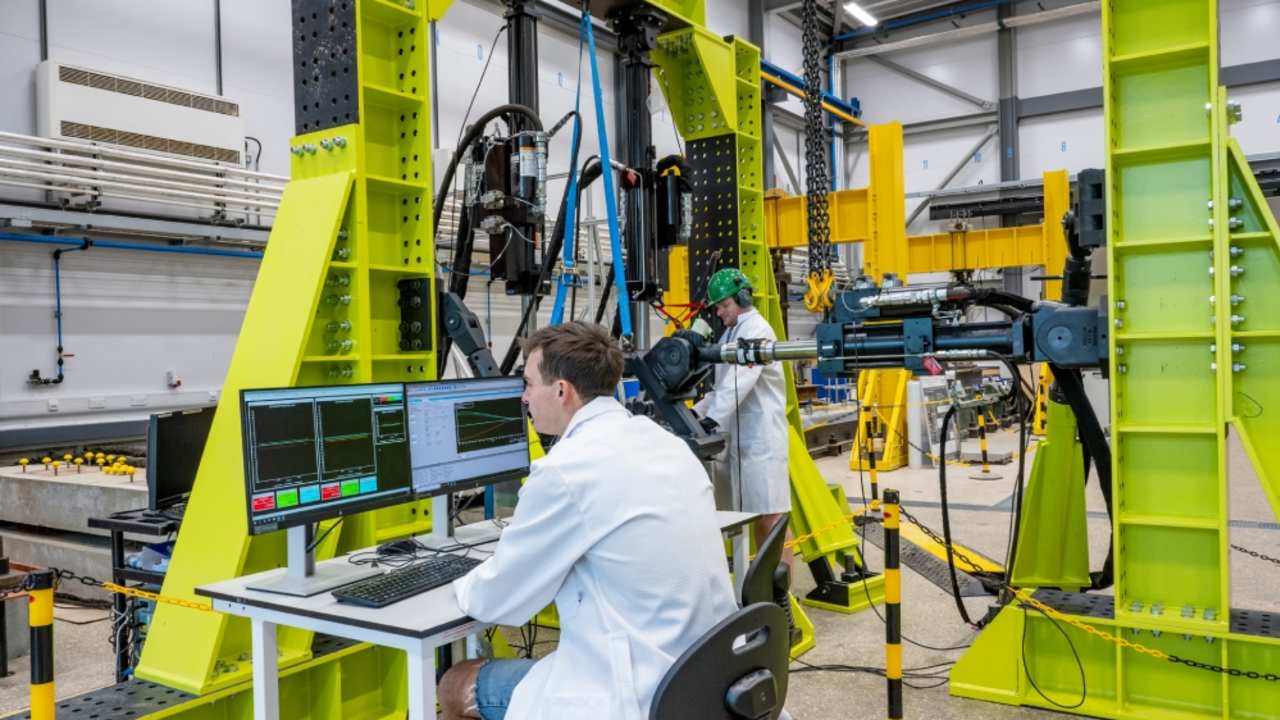
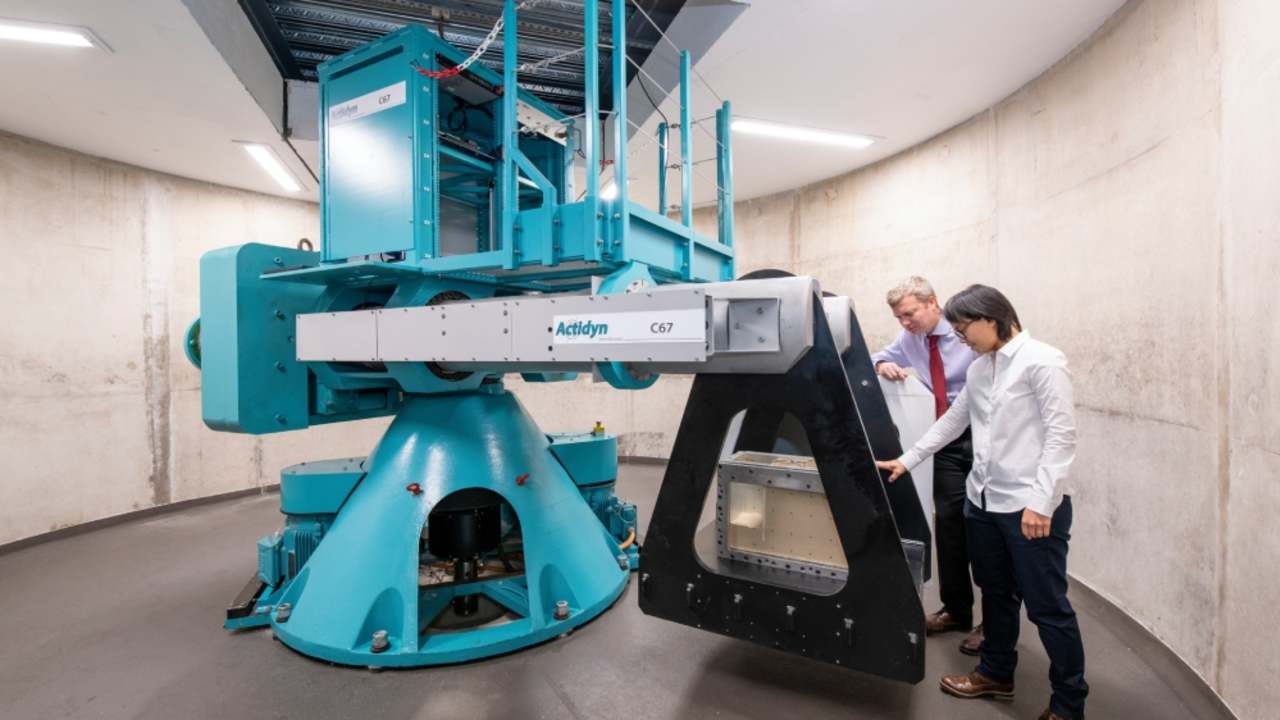
You’ll have access to the exceptional facilities you’d expect from a leading research university, such as the UK’s largest university towing tank, high-voltage testing labs, cleanrooms for nanofabrication, advanced imaging and prototyping facilities and instrumentation for spectroscopy, electrochemistry and sustainable materials.

With funded programmes, scholarships and opportunities to work flexibly, we’re committed to breaking down barriers to postgraduate research. For example, we host or partner in several UK Research and Innovation (UKRI) specialist Centres for Doctoral Training (CDTs) that offer fully funded opportunities in collaboration with industry:

If entrepreneurship is your route to real-world impact, our on-campus business accelerator Future Worlds offers mentoring, funding advice and access to global investor networks. You’ll be immersed in a strong enterprise culture – the University tops the world rankings for business incubation, with 26 spin-outs and over 199 patents in the last three years.

Opportunities for skills development, such as teaching, demonstrating and public engagement, are embedded into your PhD journey. You can also choose from over 400 workshops each year to build a professional development programme tailored to your career ambitions.


Funded PhD programmes in related subject areas


Take your place in a vibrant, inclusive research community where you’ll get all the support you need to thrive.

Welcome events, mentoring schemes, talks and regular informal coffee sessions will help you settle in and make connections, while the University’s Doctoral College brings the wider postgraduate research community together to share ideas and celebrate successes. Its activities include poster exhibitions and a Three Minute Thesis competition – won in 2025 by one of our second-year Electronics and Computer Science researchers, who went through to the UK semi-finals.

We are committed to fostering an environment where research excellence and inclusion go hand in hand, through initiatives such as the Race Equality Charter, Athena Swan recognition and Black Futures Scholarships. Postgraduate networks, including a parents’ and carers’ network and LGBTQ+ groups, create a space for people with shared interests or priorities. There are also comprehensive wellbeing, disability and inclusion services to provide any additional support you might need.

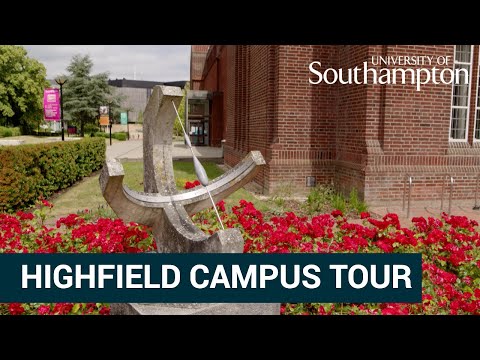
Depending on your field of research, you’ll likely be based at Highfield Campus, which blends a traditional academic setting with modern facilities, or the University’s newest campus at nearby Boldrewood. Both campuses are home to world-class research and testing facilities.

From either location, you’ll be able to enjoy all that Southampton has to offer. A friendly, walkable city with a mix of cultural venues, green spaces, coastal walks and a mild climate, it’s a great place for postgraduate life.


Our standard start dates are September, January, April, and June, with most postgraduate researchers starting in September. If you hold a student visa and are currently studying for an MSc in the UK, the September start date may not be available to you.

Our ‘competition-funded’ projects are eligible to apply to other funding schemes. Some of these may cover the difference between overseas and UK tuition fees, and others will support your tuition fees and/or provide an annual stipend. Horizon Europe fee waivers are automatically applied for all eligible postgraduate researchers starting their programme in the 2026/27 academic year. The waiver covers the difference between overseas and UK tuition fees, and you can combine this waiver with other funding sources. Visit our website for a list of eligible countries. You may qualify for one of our postgraduate scholarships or fee waivers that cover tuition fees and more. Search for your topic area and check the ‘Funding and fees’ page for more information about our schools’ funding arrangements. Many of those projects are funded through the EPSRC Doctoral Landscape Award.

Each project listing has an assigned supervisor; you’ll find their contact details in the listing. You are not limited to the listed projects – if you have a research idea of your own, you can search for a possible supervisor or make an enquiry.

Projects advertised as ‘fully funded’ will cover your tuition fees and provide a tax-free annual stipend to support your living costs. UK Research and Innovation has set the minimum stipend at £20,780 (for full-time students).

These opportunities are highly competitive and often come with specific eligibility requirements, so it’s important to check the funding information for the project before applying.

Our programmes typically require a minimum of an upper second-class (2:1) honours undergraduate degree (or equivalent), or a master’s-level qualification, in a relevant subject. Evidence of prior professional practice or learning may also be taken into account. Our funded programmes are highly competitive and normally require at least a first-class honours degree (or equivalent).


Main campus

University of Southampton

Southampton

South East

United Kingdom

PhD saved sucessfully
Institution profile for University of Southampton More details

2D Materials as Quantum Sensors

University of Southampton Faculty of Engineering and Physical Sciences
Supervisors. Dr Makars Šiškins m.siskins@soton.ac.uk. This project, within the EPSRC Centre for Doctoral Training in Quantum Technology Engineering at the University of Southampton (https://qte.ac.uk), carries a UKRI TechExpert enhanced annual stipend around £31k for UK students. Read more
 Supervisor: Dr MS Šiškins
 31 July 2026  Competition Funded PhD Project (Students Worldwide)  PhD Research Project
More details
Institution profile for University of Southampton More details

2D-Transition Metal Dichalcogenide Nanoelectronic Devices for Neuromorphic Computing

University of Southampton Faculty of Engineering and Physical Sciences
Supervisory Team. Dr Ruomeng Huang, Prof. Kees de Groot and Dr Shibin Thomas. This project will explore transition metal dichalcogenide (TMDC) semiconductors to build transistors and memristive devices enabling energy-efficient neuromorphic systems. Read more
 Supervisor: Dr R Huang
 31 August 2026  Competition Funded PhD Project (Students Worldwide)  PhD Research Project
More details
Institution profile for University of Southampton More details

A new frontier in distributed temperature sensing in hollow-core fibres

University of Southampton Faculty of Engineering and Physical Sciences
Supervisory Team. Dr Ali Masoudi and Dr Hans Christian Mulvad. Imagine measuring temperature along 200 km of optical fibre with unprecedented precision, even in extreme environments. Read more
 Supervisor: Dr A Masoudi
 30 June 2026  Competition Funded PhD Project (Students Worldwide)  PhD Research Project
More details
Institution profile for University of Southampton More details

A Quantum Leap for Quantum Technology

University of Southampton Faculty of Engineering and Physical Sciences
Supervisory Team. Dr Ian Davidson, Dr Ghafour Amouzad Mahdiraji, and Professor Francesco Poletti. Take a Quantum Leap into the Future of Photonics. Read more
 Supervisor: Dr I Davidson
 31 July 2026  Competition Funded PhD Project (UK Students Only)  PhD Research Project
More details
Institution profile for University of Southampton More details

Acoustic Array and Physics-Informed AI for Hydrogen Leak Detection and Localisation

University of Southampton Faculty of Engineering and Physical Sciences
Supervisory Team. Dr Michal Kalkowski and Dr Chao Zheng. This project aims to merge state-of-the-art acoustics, physics-based modelling, and cutting-edge artificial intelligence (AI) to advance hydrogen leak detection in complex environments. Read more
 Supervisor: Dr M Kalkowski
 1 July 2026  Funded PhD Project (UK Students Only)  PhD Research Project
More details
Institution profile for University of Southampton More details

Advanced beam shaping for next-generation fibre lasers

University of Southampton Faculty of Engineering and Physical Sciences
Supervisory Team. Dr Yongmin Jung and Prof. Michalis Zervas. This project focuses on developing advanced fibre designs and novel devices for programmable spatial and polarization beam shaping, pushing the boundaries of fibre laser performance and versatility. . Read more
 Supervisor: Dr Y Jung
 31 July 2026  Competition Funded PhD Project (Students Worldwide)  PhD Research Project
More details
Institution profile for University of Southampton More details

Advanced Lasers for Quantum Enhanced Microscopy

University of Southampton Faculty of Engineering and Physical Sciences
Supervisors. Dr. Lin Xu l.xu@soton.ac.uk. Prof. Sumeet Mahajan. This project, within the EPSRC Centre for Doctoral Training in Quantum Technology Engineering at the University of Southampton (https://qte.ac.uk), carries a UKRI TechExpert enhanced annual stipend around £31k for UK students. Read more
 Supervisor: Dr L Xu
 31 July 2026  Competition Funded PhD Project (Students Worldwide)  PhD Research Project
More details
Institution profile for University of Southampton More details

Adversarial defence for Large Language Models (LLMs)

University of Southampton Faculty of Engineering and Physical Sciences
Supervisory Team. Prof Stuart Middleton. Large Language Models (LLMs) are powerful but can be tricked - Adversarial Defence protects them. Read more
 Supervisor: Assoc Prof SM Middleton
 30 June 2026  Competition Funded PhD Project (Students Worldwide)  PhD Research Project
More details
Institution profile for University of Southampton More details

Aerodynamics of rough surfaces: transition and heating

University of Southampton Faculty of Engineering and Physical Sciences
Supervisory Team. Prof Neil Sandham. High speed boundary layer transition to turbulence over rough surfaces with heat transfer is an outstanding problem in fluid mechanics, with important technological applications. Read more
 Supervisor: Prof N Sandham
 30 June 2026  Competition Funded PhD Project (UK Students Only)  PhD Research Project
More details
Institution profile for University of Southampton More details

AI directed materials discovery and atomistic modelling

University of Southampton Faculty of Engineering and Physical Sciences
Supervisory Team. Dr Pier Sazio and Dr Ioannis Zeimpekis. About the Project. This project develops chalcogenide glass materials for optical and electronic applications using cleanroom fabrication and AI-driven simulations. Read more
 Supervisor: Dr P Sazio
 31 August 2026  Competition Funded PhD Project (Students Worldwide)  PhD Research Project
More details

