





This project is no longer listed on FindAPhD.com and may not be available.
Click here to search FindAPhD.com for PhD studentship opportunities
Dr T Millard
Applications accepted all year round
Self-Funded PhD Students Only

About the Project
The tissues of our bodies regularly sustain damage due to injury, disease or surgery. Some tissues are able to repair damage relatively effectively, although some degree of scarring usually remains. We are investigating how tissue repair occurs at the molecular level in order to identify potential therapeutic approaches to improve the abilities of our bodies to repair themselves.
Tissue repair involves a great deal of cell movement, for example the movement of skin cells to cover a wound, or movement of immune cells to a site of injury to kill micro-organisms. We are interested in understanding how these cell movements occur and how they are controlled. We are using the fruit fly Drosophila for this research, which has the advantage that we can observe cell movements during tissue repair in live animals with very high resolution. This allows us achieve a clear understand of the cellular processes involved in driving and regulating cell movements. In addition to this, we can use sophisticated genetic techniques to label particular cell-types with fluorescent proteins and identify the role of specific genes in tissue repair processes.
This project will involve an analysis of genes that control the closure of skin wounds in the Drosophila embryo and will also investigate the role of these genes in the movement of immune cells to wound sites in embryos.
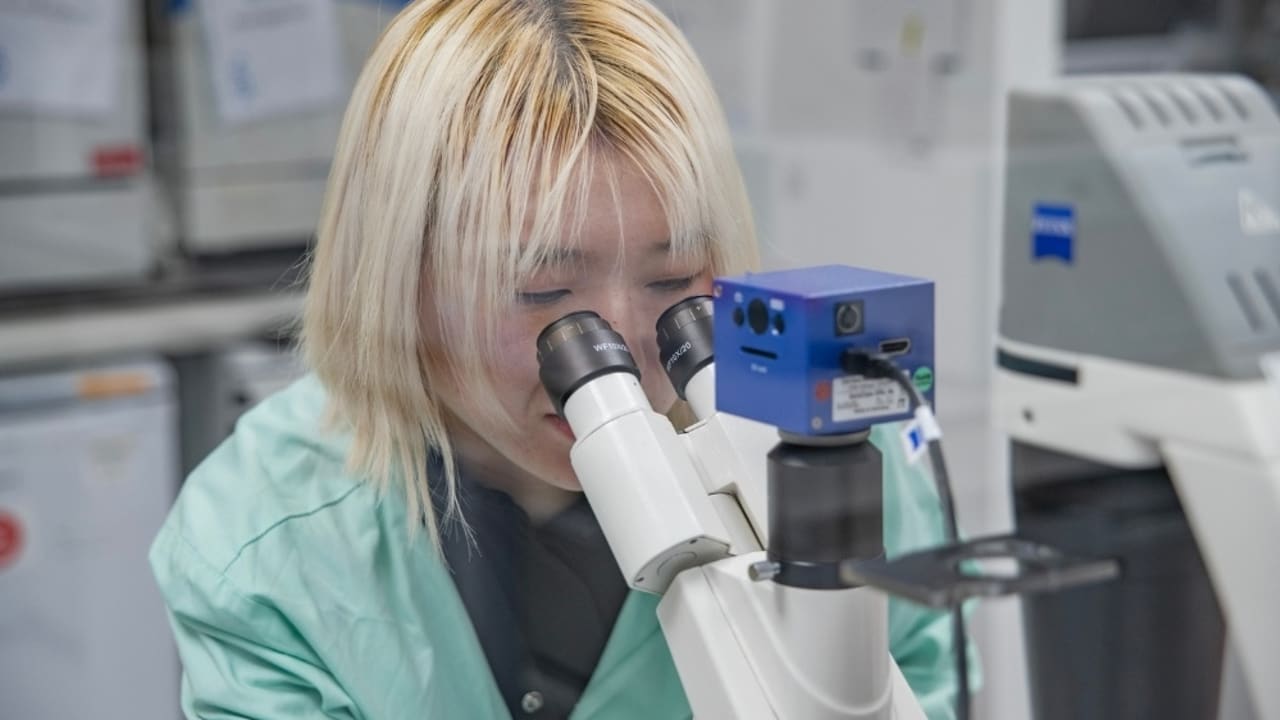
The student conducting this project will receive training in molecular biology, genetic manipulation and analysis, and a range of advanced microscopy techniques. Our faculty posseses a wide range of state-of-the-art imaging systems, including point-scan and spinning-disc confocal microscopes, which will be used extensively in this project
Tissue repair involves a great deal of cell movement, for example the movement of skin cells to cover a wound, or movement of immune cells to a site of injury to kill micro-organisms. We are interested in understanding how these cell movements occur and how they are controlled. We are using the fruit fly Drosophila for this research, which has the advantage that we can observe cell movements during tissue repair in live animals with very high resolution. This allows us achieve a clear understand of the cellular processes involved in driving and regulating cell movements. In addition to this, we can use sophisticated genetic techniques to label particular cell-types with fluorescent proteins and identify the role of specific genes in tissue repair processes.
This project will involve an analysis of genes that control the closure of skin wounds in the Drosophila embryo and will also investigate the role of these genes in the movement of immune cells to wound sites in embryos.
The student conducting this project will receive training in molecular biology, genetic manipulation and analysis, and a range of advanced microscopy techniques. Our faculty posseses a wide range of state-of-the-art imaging systems, including point-scan and spinning-disc confocal microscopes, which will be used extensively in this project
Funding Notes
References
Stramer B, Moreira S, Millard T, Evans I, Sabet O, Milner M, Dunn G, Martin P, Wood W. Clasp mediated microtubule bundling regulates contact repulsion in Drosophila macrophages in vivo J. Cell Biol. (2010) 189 681-689.
Millard TH, Martin P. Dynamic analysis of filopodial interactions during the zippering phase of Drosophila dorsal closure. Development (2008) 135 621-626.
Jacinto A, Martinez-Arias A, Martin P. Mechanisms of epithelial fusion and repair. Nat Cell Biol. (2001) 3 E117-23.
Millard TH, Martin P. Dynamic analysis of filopodial interactions during the zippering phase of Drosophila dorsal closure. Development (2008) 135 621-626.
Jacinto A, Martinez-Arias A, Martin P. Mechanisms of epithelial fusion and repair. Nat Cell Biol. (2001) 3 E117-23.




 Continue with Facebook