


or
Looking to list your PhD opportunities? Log in here.
Make your mark at the leading edge of science and engineering research. At the University of Southampton’s Faculty of Engineering and Physical Sciences, we’re studying stars as they explode, inscribing the human genome into crystals, shaping the future of human interaction with AI, helping build brighter liveable cities, and using chemistry for sustainable manufacturing. We’re looking for innovators, critical thinkers and curious minds to join us in driving new discoveries, with real opportunities for impact through our links with industry and governments and our enterprise initiatives. In return you’ll benefit from multi-million-pound research facilities, the expertise of leading specialists and a supportive, inclusive research community.
96% of our research environment, which includes our facilities, resources and expertise, is rated world-leading or internationally excellent (REF 2021), placing us in a globally competitive position.
Fully funded programmes available in defence and security, sustainability and quantum engineering – offered through our specialist Centres for Doctoral Training.
Advance your entrepreneurial ambitions through Future Worlds, our on-campus accelerator.
Work with highly regarded researchers, including 36 Fellows of the UK’s prestigious Royal Society and the Royal Academy of Engineering.
Make a difference in a faculty that focuses on real-world change, recognised by three Queen Elizabeth Prizes for Education – the highest UK state honours for excellence, innovation and impact.
postgraduate students
PhDs
of our research is rated either world-leading or internationally excellent (REF 2021)
main campus
The Faculty of Engineering and Physical Sciences is home to around 40% of the University of Southampton’s postgraduate researchers, putting you at the heart of a dynamic, diverse research environment. Here you’ll join a community of brilliant minds who are finding solutions to global problems across engineering, chemistry, physics, photonics and computer science.
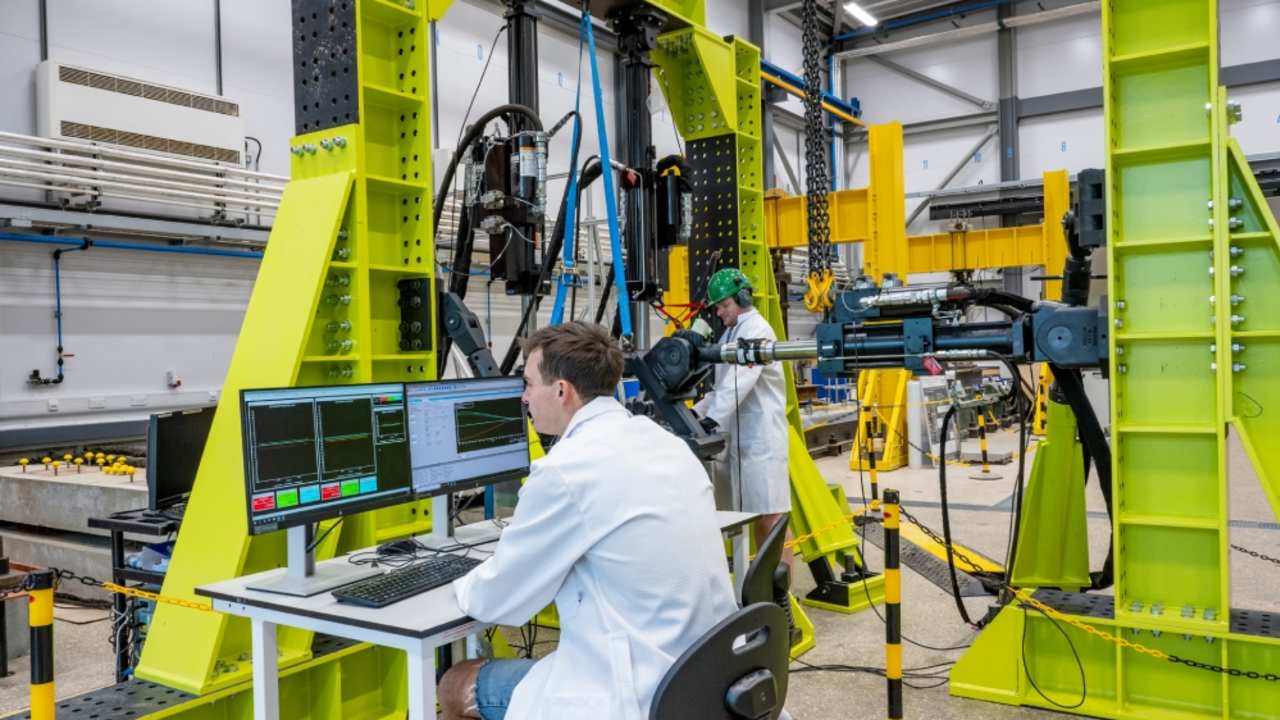
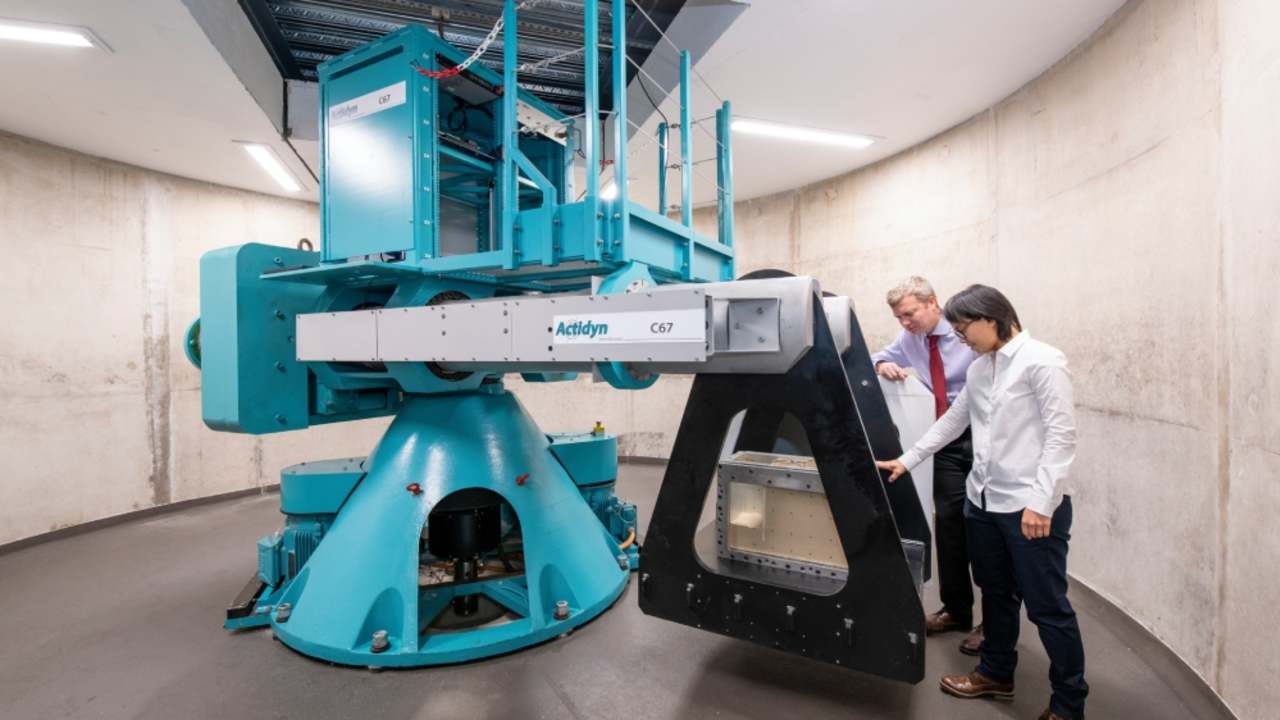
You’ll have access to the exceptional facilities you’d expect from a leading research university, such as the UK’s largest university towing tank, high-voltage testing labs, cleanrooms for nanofabrication, advanced imaging and prototyping facilities and instrumentation for spectroscopy, electrochemistry and sustainable materials.
With funded programmes, scholarships and opportunities to work flexibly, we’re committed to breaking down barriers to postgraduate research. For example, we host or partner in several UK Research and Innovation (UKRI) specialist Centres for Doctoral Training (CDTs) that offer fully funded opportunities in collaboration with industry:
If entrepreneurship is your route to real-world impact, our on-campus business accelerator Future Worlds offers mentoring, funding advice and access to global investor networks. You’ll be immersed in a strong enterprise culture – the University tops the world rankings for business incubation, with 26 spin-outs and over 199 patents in the last three years.
Opportunities for skills development, such as teaching, demonstrating and public engagement, are embedded into your PhD journey. You can also choose from over 400 workshops each year to build a professional development programme tailored to your career ambitions.
Take your place in a vibrant, inclusive research community where you’ll get all the support you need to thrive.
Welcome events, mentoring schemes, talks and regular informal coffee sessions will help you settle in and make connections, while the University’s Doctoral College brings the wider postgraduate research community together to share ideas and celebrate successes. Its activities include poster exhibitions and a Three Minute Thesis competition – won in 2025 by one of our second-year Electronics and Computer Science researchers, who went through to the UK semi-finals.
We are committed to fostering an environment where research excellence and inclusion go hand in hand, through initiatives such as the Race Equality Charter, Athena Swan recognition and Black Futures Scholarships. Postgraduate networks, including a parents’ and carers’ network and LGBTQ+ groups, create a space for people with shared interests or priorities. There are also comprehensive wellbeing, disability and inclusion services to provide any additional support you might need.
Depending on your field of research, you’ll likely be based at Highfield Campus, which blends a traditional academic setting with modern facilities, or the University’s newest campus at nearby Boldrewood. Both campuses are home to world-class research and testing facilities.
From either location, you’ll be able to enjoy all that Southampton has to offer. A friendly, walkable city with a mix of cultural venues, green spaces, coastal walks and a mild climate, it’s a great place for postgraduate life.
When can I start my studies?
Our standard start dates are September, January, April, and June, with most postgraduate researchers starting in September. If you hold a student visa and are currently studying for an MSc in the UK, the September start date may not be available to you.
What other PhD funding opportunities are available?
Our ‘competition-funded’ projects are eligible to apply to other funding schemes. Some of these may cover the difference between overseas and UK tuition fees, and others will support your tuition fees and/or provide an annual stipend. Horizon Europe fee waivers are automatically applied for all eligible postgraduate researchers starting their programme in the 2026/27 academic year. The waiver covers the difference between overseas and UK tuition fees, and you can combine this waiver with other funding sources. Visit our website for a list of eligible countries. You may qualify for one of our postgraduate scholarships or fee waivers that cover tuition fees and more. Search for your topic area and check the ‘Funding and fees’ page for more information about our schools’ funding arrangements. Many of those projects are funded through the EPSRC Doctoral Landscape Award.
How do I find a PhD supervisor?
Each project listing has an assigned supervisor; you’ll find their contact details in the listing. You are not limited to the listed projects – if you have a research idea of your own, you can search for a possible supervisor or make an enquiry.
What is a fully funded research project?
Projects advertised as ‘fully funded’ will cover your tuition fees and provide a tax-free annual stipend to support your living costs. UK Research and Innovation has set the minimum stipend at £20,780 (for full-time students).
These opportunities are highly competitive and often come with specific eligibility requirements, so it’s important to check the funding information for the project before applying.What are the entry requirements for postgraduate researchers?
Our programmes typically require a minimum of an upper second-class (2:1) honours undergraduate degree (or equivalent), or a master’s-level qualification, in a relevant subject. Evidence of prior professional practice or learning may also be taken into account. Our funded programmes are highly competitive and normally require at least a first-class honours degree (or equivalent).
University of Southampton
Southampton
South East
United Kingdom
More details
More details
More details
More details
More details
More details
More details
More details
More details
More details