






This project is no longer listed on FindAPhD.com and may not be available.
Click here to search FindAPhD.com for PhD studentship opportunities
Prof C Wellbrock
Applications accepted all year round
Self-Funded PhD Students Only

About the Project
Malignant melanoma accounts for over 85% of all skin cancer deaths, mainly due to resistance against conventional chemotherapies and an early acquisition of invasive behaviour. During melanoma development transformed cells display an altered communication with their microenvironment and adopt changes in adhesion-dependent differentiation, proliferation, survival and motility. This facilitates uncontrolled tumour cell proliferation within the epidermis, invasion into the dermis and eventually colonisation to distant sites.
In order to dissect signalling events relevant for melanoma cell invasion, we have investigated the role of cadherins and catenins because they are main regulators of cell-cell adhesion and interactions with the extracellular environment. We discovered novel roles for beta-catenin and p120-catenin in melanoma cell proliferation and invasion and now want to further characterise their function in melanoma development. This includes studying their interaction with different cadherins (E-cadherin in normal cells, N-cadherin in invasive cells), dissecting the mechanism by which they regulate proliferation, and how they contribute to cell survival when cells cannot make cell-cell contact (a situation found when cells disseminate and give rise to circulating tumour cells and distant metastasis). If we can better understand how these proteins function, we can identify drugs that will allow interfering with their role in melanoma development.
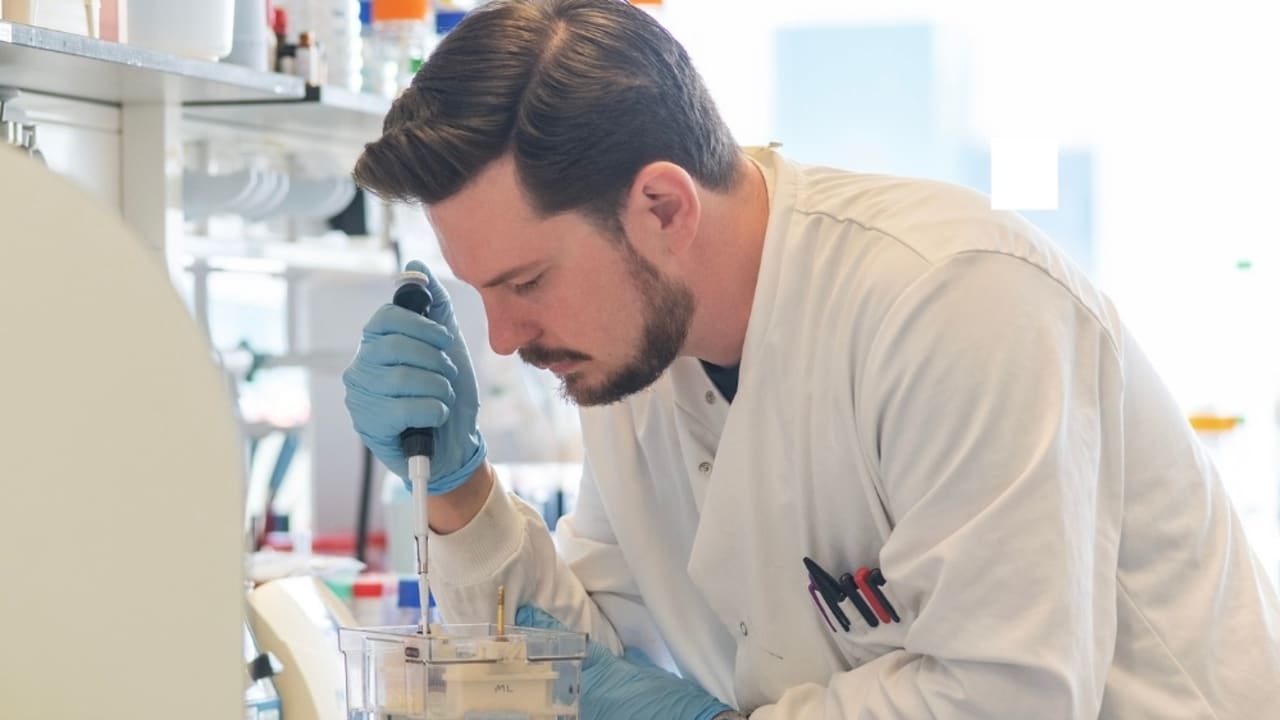
The project will use cell signalling inhibitors and RNAi approaches in cell-culture, and live-cell imaging in three-dimensional (3D) culture systems and in vivo in zebrafish models, where cell invasion, dissemination into the bloodstream and distant seeding of cancer cells can be visualized. Overall, the project provides a unique opportunity to acquire knowledge in a wide range of protein-biochemical, cell-biological and imaging techniques related to translational cancer research.
In order to dissect signalling events relevant for melanoma cell invasion, we have investigated the role of cadherins and catenins because they are main regulators of cell-cell adhesion and interactions with the extracellular environment. We discovered novel roles for beta-catenin and p120-catenin in melanoma cell proliferation and invasion and now want to further characterise their function in melanoma development. This includes studying their interaction with different cadherins (E-cadherin in normal cells, N-cadherin in invasive cells), dissecting the mechanism by which they regulate proliferation, and how they contribute to cell survival when cells cannot make cell-cell contact (a situation found when cells disseminate and give rise to circulating tumour cells and distant metastasis). If we can better understand how these proteins function, we can identify drugs that will allow interfering with their role in melanoma development.
The project will use cell signalling inhibitors and RNAi approaches in cell-culture, and live-cell imaging in three-dimensional (3D) culture systems and in vivo in zebrafish models, where cell invasion, dissemination into the bloodstream and distant seeding of cancer cells can be visualized. Overall, the project provides a unique opportunity to acquire knowledge in a wide range of protein-biochemical, cell-biological and imaging techniques related to translational cancer research.
Funding Notes
This project has a Band 2 fee. Details of our different fee bands can be found on our website. For information on how to apply for this project, please visit the Faculty of Biology, Medicine and Health Doctoral Academy website. Informal enquiries may be made directly to the primary supervisor.
References
1.Gray-Schopfer V, Wellbrock C, Marais R (2007). Melanoma biology and new targeted therapy. Nature.;445(7130):851-7
2. Wellbrock C, Hurlstone A. (2010) BRAF as therapeutic target in melanoma. Biochem Pharmacol.;80(5):561-7
3. Arozarena I, Bischof H, Gilby D, Belloni B, Dummer R, Wellbrock C. (2011) In
melanoma, beta-catenin is a suppressor of invasion. Oncogene;30(45):4531-43
4. Ferguson J, Arozarena I, Ehrhardt M, Wellbrock C. (2012) Combination of MEK and SRC inhibition suppresses melanoma cell growth and invasion. Oncogene, Feb 6. [Epub ahead of print] PubMed PMID: 22310287
2. Wellbrock C, Hurlstone A. (2010) BRAF as therapeutic target in melanoma. Biochem Pharmacol.;80(5):561-7
3. Arozarena I, Bischof H, Gilby D, Belloni B, Dummer R, Wellbrock C. (2011) In
melanoma, beta-catenin is a suppressor of invasion. Oncogene;30(45):4531-43
4. Ferguson J, Arozarena I, Ehrhardt M, Wellbrock C. (2012) Combination of MEK and SRC inhibition suppresses melanoma cell growth and invasion. Oncogene, Feb 6. [Epub ahead of print] PubMed PMID: 22310287




 Continue with Facebook