

or
 Continue with Facebook
Looking to list your PhD opportunities? Log in here.

Moving abroad for postgraduate study can seem like a no-brainer. You get to ‘internationalise’ your CV, experience a different country and perhaps learn a new language, often at a fraction of the cost of a postgraduate course nearer home.
But it’s not always so easy to decide where exactly to study abroad (or whether moving to a new country would be right for you). Having studied abroad as a postgrad myself, I thought I’d share some tips, drawing on my own experience of looking for the perfect Masters (spoiler: I went for the University of Amsterdam).
As you’d expect, the structure of postgraduate study differs widely from country to country. One example of this is the predominance of two-year Masters courses across Europe, in contrast with typically one-year equivalents in the UK.
There are both benefits and downsides to two-year Masters. On the one hand, you’ll usually earn more academic credits than on a one-year course, giving you the chance to really delve into your subject. But if you’re eager to get straight into work, you might prefer to finish your studies in a single year. Apart from the UK, the Netherlands is perhaps the most prominent European country offering one-year Masters, which was one reason why I ended up going to the University of Amsterdam.
Similarly, the approach taken to PhD study and the structure of doctoral research programmes vary across the world. Some countries actually treat doctoral candidates as salaried staff. Others take a unique approach to the viva voce. For example, the Netherlands has an elaborate procedure involving a ceremonial mace, full academic garb and a pair of paranimfen by your side (supporters who will act for you if you’re unable to answer a question). Australia, meanwhile, tends not to include a PhD viva at all.
Fees are an obvious factor when choosing where to study. In particular, Europe combines low (or zero) tuition fees with world-class institutions, making it an attractive destination for students from around the world. If you’re an international student from outside the EU or EEA, however, you’ll often find yourself paying considerably higher fees than European students. The likes of Germany, France and Norway are exceptions to this rule, treating international PhD and Masters students the same as EU / EEA citizens.
Even though Dutch universities charge in the region of 2000 euros per year for EU / EEA Masters students – relatively expensive in European terms – the length of their Masters mean that you only have to study for one year. By contrast, even though Masters (and PhD) programmes are ‘free’ for EU students in countries like Sweden, you have to think about supporting yourself financially for an extra year of study.
If you’ve got your heart set on somewhere more expensive – for example America or Australia – many universities do have generous scholarship programmes for international students, so it’s always worth checking these and doing your research well in advance of the application deadlines.
Looking for somewhere to study, you might feel overwhelmed by the choice of countries, cities and universities. Do you go for picturesque canals, fairy-tale architecture or dramatic landscapes?
Well, an obvious place to start is the various university rankings tables. But these aren’t necessarily the be all and the end all. One factor for me when choosing Amsterdam was how easy and cheap it was to reach from the UK, thanks to those ubiquitous budget airlines transporting stag parties to the Dutch capital.
Alternatively, you might want to choose a country for postgraduate study based on its proximity to other interesting places. For example, as well as boasting no tuition fees for EU and EEA students, Finland is within easy reach of Sweden, Estonia and Russia – all fantastic opportunities for weekends away.
If you’re after some inspiration, take a look at our previous blog on scenic cities for study abroad.
Moving to Amsterdam from Sheffield, I didn’t have to worry too much about culture shock. After all, the Netherlands and the UK share similarly dismal climates (as well as a less-than-stellar culinary reputation).
I suppose the only thing that took me a bit of time to get used to was the constant stream of bicycles speeding down every street, but I soon bought my own rickety bike and joined the rat-race, ringing my bell furiously at anyone who dared cross my path.
But the transition to life as a postgraduate student in a different country isn’t always as smooth, particularly if you’ve moved to a completely new continent. Luckily, there are international student associations at almost every university, dedicated to making new arrivals feel welcome and helping them with issues like housing and health insurance.
We’ve also blogged previously on top tips for international students moving to the UK, giving some great advice on what to expect and how to make the most of your time here.
Something else to think about is the language situation in your prospective new home. More and more universities worldwide are offering postgraduate courses in English, so do you want to move to a country where English isn’t widely spoken, and push yourself to learn the local language?
Or do you want to stay in your comfort zone and study in a nation with high levels of English literacy, like the Netherlands or one of the Nordic countries?
Of course, both options have their positives. And, even if you decide to move to a place where English is commonly used, there’s nothing to stop you learning the local language. I managed to pick up a decent amount of Dutch while I was in Amsterdam, and found the experience of learning a new language incredibly rewarding.
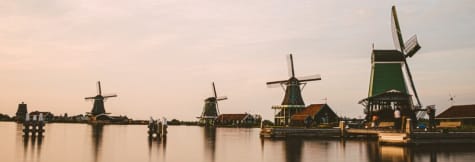

Here's what you need to know about applying for a Masters or PhD at one of the Netherlands' excellent universities, with advice on applications, fees, funding and arrivals.
Read more
Applications for many PhD and Masters programmes at German universities are still open – this is what you need to know about studying in Germany this year.
Read more

or
Continue with Facebook