

or
 Continue with Facebook
Looking to list your PhD opportunities? Log in here.
We're celebrating international students in the UK by supporting the #WeAreInternational campaign.
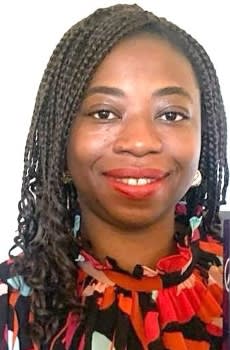
Originally from Ghana, West Africa, it was a childhood dream of Josephine Agyeman-Duah to study at Oxford someday. Not only did she get there, but through her studies, she has converted in-person neurodevelopmental assessments to a virtual platform where children can be assessed from the comfort of their homes through play-based activities, breaking down barriers to access. No wonder she’s our PhD Student of the Year! We chatted with Josephine about her journey so far.
I did Biochemistry because I love science and I have an inquisitive nature. I was interested in understanding our body's biochemical processes and molecular reactions to help develop medicines for rare diseases.
During my undergraduate studies, I worked in labs and did community work. It was fascinating to see the application of knowledge addressing societal problems and impacting lives at scale. My passion for human-facing work while finding solutions to health problems grew, and that’s when I decided to pursue Public Health as a career. I then did a MSc in International Health at the Ruprecht-Karls University of Heidelberg, Germany, during which I did fieldwork in Malawi to contribute to restructuring the quality improvement processes at the Central Hospital in Lilongwe.
No, I didn’t. After studying in Germany, I returned to Ghana to apply the knowledge I had gained to contribute to improving the health system. First, I worked as a Quality Improvement Officer at a Tertiary Hospital. I later had the opportunity to be a regional lead on a project to reduce under-five mortality and improve maternal and child health. I’ll always cherish my work with Project Fives Alive! because our work was community-led; it built the capacity of health workers and achieved a 31% reduction in under-five mortality rates in collaborative hospitals.
I also worked in the international health space in Switzerland, where I have been involved in influencing health policies at national and global levels.
Having some work experience before pursuing a PhD in a discipline like International Health is useful. The working break allows you to apply the concepts learnt in the classroom, and dealing with real-life situations expands your scope and authority in the sector. I could identify gaps that needed to be explored academically to find solutions to improve public health.
Doing a PhD has always been part of my career plan to contribute to scientific knowledge to advance human development. My work on the under-five project made me think about the quality of life of vulnerable children beyond survival. I identified a gap in the continuum of care that needed research tools to address. I, therefore, decided to focus my PhD on improving outcomes for children born preterm. In my research, I have explored interventions that can improve the neurodevelopment of children born moderate-to-late preterm and their parents' experiences and opinions on improving neurodevelopmental follow-up and care for their children.
Pursuing my PhD has been both fulfilling academically and professionally in that my research builds on my previous work experience and is breaking ground to improve care for vulnerable populations.
Working in public health is fascinating; you identify problems, brainstorm ideas, and apply tools and concepts to address them in real-life scenarios. On the flip side, being in academia is rewarding; you generate knowledge to address problems.
Understanding both worlds, I can identify a public health problem and apply academic skills and scientific expertise to find solutions.
A typical day as a PhD student has varied across my study period. There have been times when I have been heavily involved in desk work, reading, analysis and writing. At other times, I have been in meetings with parents, contacting hospital teams/consultants, exploring approaches to conducting remote assessments or at the hospital performing neurodevelopmental assessments. Some of my PhD time has been spent presenting at conferences, meeting with collaborators and writing publications.
I have also done a lot of extra-curricular activities at the university, where my work has been acknowledged with awards like the Race Equality Award from the Oxford University Students’ Union and the Nautilus Awards from Green Templeton College, University of Oxford. I have taken up leadership roles, serving as Vice President of the Postgraduate Research Committee at my department, becoming the first Black Students Representative at the Graduate Common Room, and being President of the Black Students Society. Some of the initiatives I started included the Black Mentorship Programme for the career development of Black and minority ethnic groups, the STEM Outreach Programme for deprived schools, and the Maarifa Library Collection for self-education on racism and to celebrate writers of minority ethnic backgrounds.
I love to start my day with a walk. It’s the best way to get inspiration and breathe fresh air. I also like to meditate, and I do that through morning Mass. It allows me to reflect and re-energise to get through busy and demanding days.
I attend social events at my college and university and keep in touch with family and acquaintances back home. Staying in touch with family and friends back home, especially if you live outside your home country, is essential; it keeps you connected to your roots.
I recommend that you find people interested in your personal and academic development. My supervisors allow me to innovate, do independent work, and are there whenever I need them. They challenge me to think critically and have helped me to sharpen my research skills. They care about my personal development and welfare beyond academic work.
When faced with challenges, take a step back and look for an opportunity within what you may consider a mess. Covid-19 presented many challenges to my research work but also made me innovate, which has led to multiple recognitions and awards.
Also, your academic work comes first during your PhD but don’t feel stuck only in it, be open to extra-curricular activities to enrich your experience.
Finally, make room for errors, delays and disappointments. It’s a research journey, and you may not always get it right the first time. That’s what the PhD is about: you keep exploring until you find the solution! Like Thomas Edison’s experience with the light bulb, he said, “I haven’t failed; I have just found 10,000 ways it won’t work.”

PhD study, for free? – 14 countries that charge very little (or nothing!) for doctoral degrees
Is it possible to study a PhD for free? We've taken a look at some of the countries with the lowest fees for doctoral students - and explained what 'studying a PhD for free' actually means.

A prospective PhD student's guide to the Research Excellence Framework
Results of the 2021 Research Excellence Framework have just been released. What exactly is the REF, and how can prospective PhD students use it?
The Top 5 universities in Germany for postgraduate study
Considering studying abroad in Germany? From Munich to Berlin, using the world rankings we've taken a look at Germany's best universities for Masters and PhD study.

or
Continue with Facebook