
or
 Continue with Facebook
Looking to list your PhD opportunities? Log in here.
Written by Maka Mutamiri
A PhD personal statement is your chance to show more than just your grades. It’s where you explain why you’re interested in your subject, what motivates you, and the potential you have as a researcher. The best statements show both your skills and your passion. It’s your opportunity to show why you’d fit on a doctoral programme.
Writing a PhD personal statement can feel nerve-wracking, especially if you’re not sure what to include or how to get the tone right. In this guide, I’ll go through what makes a good statement, the sections you’ll need, and some tips to help yours stand out.
A PhD personal statement is your chance to give extra information about your academic background, relevant experience, and why you want to do a PhD. It’s different from a research proposal, which focuses on a specific project, explaining its aims, methods, and academic value. Put simply: if a PhD is a unique project, your personal statement shows that you’re the kind of person who can complete one.
The format can vary. Some universities include a space for a personal statement in the application, while others ask you to submit it as a separate document or instead of a covering letter. Always check what’s required before you start writing.
Not every PhD application asks for a personal statement. It’s more likely to be requested if you’re:
A personal statement may be read by different people:
A good statement should address all of these readers without feeling forced or overly formal.
If you’re applying to a PhD in the US, you may be asked for a statement of purpose (SOP). This is very similar to a personal statement and gives you the chance to show that you’re a strong fit for the graduate school. Always check the application instructions for your chosen programme and follow the conventions of the country you’re applying to.
Your personal statement will depend on the type of PhD and your university’s requirements, so always check the guidelines first.
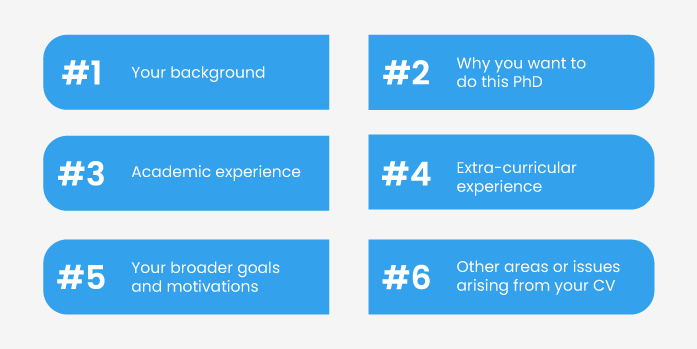
In general, it should cover:
A strong statement balances these points, giving a clear picture of your motivation, skills, and potential as a researcher—without being overly long or formal.
Crafting a strong PhD personal statement takes planning and discipline. Writing about yourself might sound easy, but deciding what to include, in what order, and how to organise it can be tricky. You know a lot about yourself—but you only have so much space to show it.
Aim for 400–500 words, roughly one side of A4. Some universities may give a specific word count, so check the application details.
A good sequence for your statement is:
By keeping your statement well-structured, clear, and concise, you make it easier for readers to see your motivation, skills, and potential as a researcher.

There are several components of a PhD application, besides your personal statement or statement of purpose. Our guides cover references, research proposals, academic CVs, cover letters and more.
Every PhD personal statement is unique, but here are some ‘rules of thumb’ ive come up with from experience that you can tick off as you start writing:
Keep your content focused on yourself as a potential PhD researcher by make sure its separate from your research proposal. Also be honest as your statement may form the basis of interview questions. Do always make sure to follow the guidelines on content, word count and format.
When I wrote my own PhD statement, I focused on the impact I want my research to have on marginalised communities. I highlighted why I’m passionate about addressing these issues and included experiences from academic, professional, or personal moments in my life that could show my commitment and understanding of the topic. For your statement, you can think about how your motivations, skills, and experiences demonstrate the unique contribution you’ll make through your research.
Last but not least, ask someone you trust to read your statement. A tutor, employer, family or friend can offer a fresh perspective, spot any gaps, and suggest improvements. Keeping your statement clear, relevant, and confident is the goal! You’ll be able to show admissions tutors and potential supervisors why you’re the right person to undertake this PhD!
Most institutions recommend 2–3 pages, typically 1.5 or double-spaced. Always check the specific guidelines of each programme, as requirements can vary.
You can reuse content, but it’s important to customise your statement for each programme. Highlight unique aspects of each institution—specific faculty, research facilities, or programme structures—to show genuine interest.
Yes. Briefly acknowledge any gaps or discrepancies in your academic or professional history. Focus on explaining the circumstances and what you learned or how you’ve grown from those experiences.

Head over to our course search to find PhD opportunities and get in contact with universities.
 Continue with Facebook

Getting ready to apply for a PhD? Our guides explain research proposals, references and entry tests for doctoral programmes.
Read more
Understand what a successful PhD research proposal needs to include and how to go about writing one for your project application.
Read more

or
Continue with Facebook