


Faculty of Biology, Medicine and Health

The University of Manchester

This project is no longer listed on FindAPhD.com and may not be available.

Click here to search FindAPhD.com for PhD studentship opportunities

  (MRC DTP) Dense control of neural dynamics by sparse interneuron networks

Dr M Humphries, Prof Rasmus Petersen  No more applications being accepted  Competition Funded PhD Project (European/UK Students Only)

About the Project

A wide range of neurological disorders, including Parkinson’s disease, Huntington’s disease and Tourette’s syndrome have been linked to the aberrant activity of output neurons in the massive, subcortical striatum. It is unknown how such aberrant activity arises from the changes to the brain known to occur in these disorders. This project will test the hypothesis that the network of fast-spiking interneurons within the striatum are a common cause of this aberrant activity.

Though they comprise less than one percent of the neuron population, the fast-spiking interneurons are thought to exert powerful control over the striatum’s output. This project will build a full-scale computational model of the fast-spiking interneuron network, and of its control over the striatum’s output neurons. With this model, we will explore how the interneuron network is controlled by its cortical inputs, and how plasticity of the cortical inputs to the network sculpts striatal output during learning. With this understanding in hand, we can then study how changes to that interneuron network result in the pathological dynamics of Parkinson’s disease, and the consequent breakdown of both motor control and cognition.

http://www.systemsneurophysiologylab.manchester.ac.uk/

Funding Notes

This project is to be funded under the MRC Doctoral Training Partnership. If you are interested in this project, please make direct contact with the Principal Supervisor to arrange to discuss the project further as soon as possible. You MUST also submit an online application form - full details on how to apply can be found on the MRC DTP website http://www.manchester.ac.uk/mrcdtpstudentships

Applications are invited from UK/EU nationals only. Applicants must have obtained, or be about to obtain, at least an upper second class honours degree (or equivalent) in a relevant subject.

References

O'Hare, J. K.; Li, H.; Kim, N.; Gaidis, E.; Ade, K.; Beck, J.; Yin, H. & Calakos, N.
Striatal fast-spiking interneurons selectively modulate circuit output and are required for habitual
behavior.
eLife, 2017, 6, e26321
Humphries, M. D.; Wood, R. & Gurney, K.
Reconstructing the three-dimensional GABAergic microcircuit of the striatum
PLoS Computational Biology, 2010, 6, e100101


Open Days


Where will I study?

Faculty of Biology, Medicine and Health

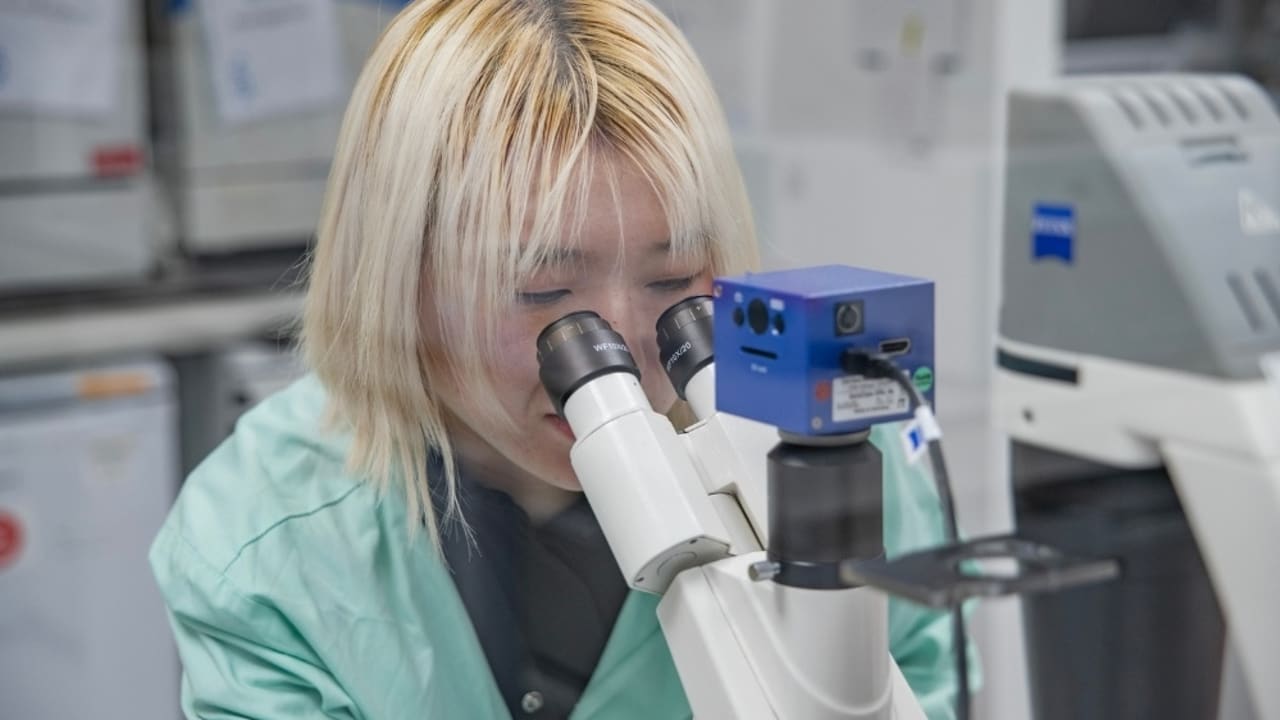
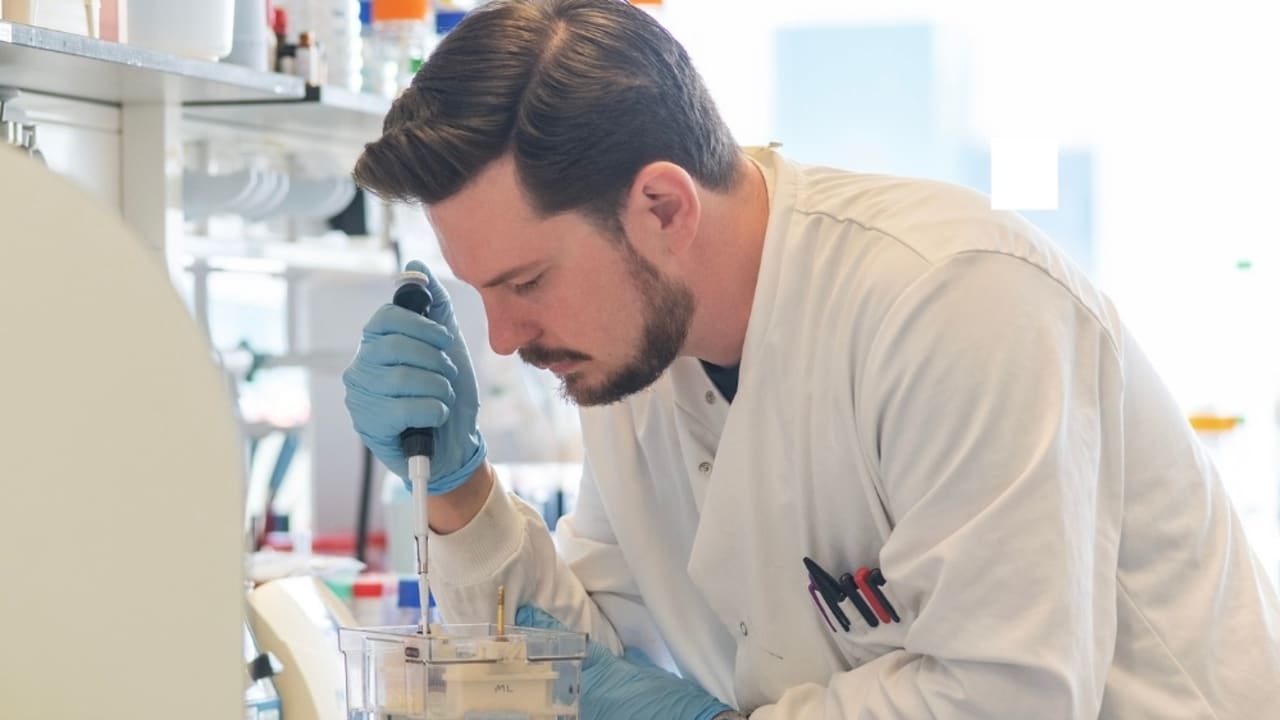
Tackle real world challenges, make a difference, and discover your future with postgraduate research in the Faculty of Biology, Medicine and Health at Manchester. From biochemistry to neuroscience, cancer sciences to medicine, audiology to mental health and everything in between, we offer a wide range of postgraduate research projects, programmes and funding which will allow you to immerse yourself in an area of research you’re passionate about.

Why study at the Faculty of Biology, Medicine and Health?

Research impact: With 93% of research activity at the University rated as 'world-leading' or 'internationally excellent' (Research Excellence Framework, 2021), you'll get the chance to have an impact on global health and science challenges.

Research community: Experience PhD life as part of a diverse postgraduate research community of more than 1,000 postgraduate researchers at the 22nd most international university in the world (Times Higher Education, 2026).

Manchester: Consistently ranked one of the best places to live in the UK, Manchester boasts world-class culture, iconic sports, a thriving music and food scene, and much more. It's not just a place to research, it's a place to call home.

1000+

postgraduate students

1st

in the world in the Times Higher Education Sustainability Impact Ratings (2026), 7th in the UK in the QS World University Ranking (2027)

Manchester  United Kingdom

main campus

Upcoming Open Days & Webinars


About the Faculty of Biology, Medicine and Health

At Manchester, postgraduate researchers are at the heart of our mission to tackle pressing global challenges in biological, medical and healthcare sciences - and you could be too.

By choosing Manchester for your postgraduate research, you’ll be joining a university with an exceptional research reputation, where 93% of research is world-leading or internationally excellent (REF, 2021) and where your work will have real-world impact.

You’ll research in world-class facilities alongside leading experts at the forefront of innovation, collaborating across disciplines to pioneer new treatments, advance scientific knowledge, and improve healthcare globally.

Supported by our dedicated Doctoral Academy and strong industry links, you'll experience PhD life in a vibrant, welcoming and diverse postgraduate research community.

And you’ll leave with the specialist knowledge, research experience and transferable skills that will shape your future in academia, research or industry.


Discover more

Search projects

Browse funding opportunities

Learn more about applying


Our Faculty brings together researchers working across biological sciences, medicine and health sciences. Research spans areas including cancer, cardiovascular disease, mental health, informatics, genomics, population health, infection, global health and healthcare innovation. You can apply for advertised PhD projects, explore funded opportunities, or, develop your own research proposal with a potential supervisor. Many of our researchers work across disciplines, schools and even Faculties, and collaborate with NHS organisations, industry partners and international institutions, creating opportunities to tackle real-world health challenges. Learn more about postgraduate research in the Faculty.

We offer a range of fully funded opportunities for UK and international applicants, including studentships, doctoral training programmes and University schemes. The Faculty participates in several major doctoral training programmes such as the BBSRC NWDP in Biosciences and supports initiatives designed to widen access to postgraduate research like the Excellence in Diversity PhD Scholarship. Funding is launched from October each year, but new opportunities can be added throughout the year, so we recommend checking regularly for new programmes and project-based studentships. Explore funding opportunities.

The vast majority of PhD opportunities in the Faculty are pre-defined projects; however, we do also accept self-proposed projects. To propose your own research you’ll need to start by defining your research idea and finding a supervisor whose expertise aligns with your idea. You’ll also need to consider funding. This will typically be a separate process to your project proposal. In most cases, having funding in place before you contact your supervisor and apply will strengthen your application and chances of success. Once you’ve considered funding and found a supervisor, you’ll be expected to write a 1,000 to 1,500 word research proposal which sets out your project and readiness for postgraduate research. Find out more about proposing your own project on our website.

The application process will depend on whether you are applying for an advertised project or proposing your own research. For advertised projects, you’ll need to find a project that matches an area you’re passionate about, check you’re eligible and contact the listed project supervisor to check you’re suitable. If you are proposing your own project, you should identify a prospective supervisor, create a research proposal and consider your funding before contacting the potential supervisor and applying. When applying you’ll need to include a supporting statement, CV, your certificates and transcripts and any official English language certificates. Learn more about applying for an advertised project.


Main campus

The University of Manchester

Manchester

North West

United Kingdom

PhD saved sucessfully

