

or
 Continue with Facebook
Looking to list your PhD opportunities? Log in here.
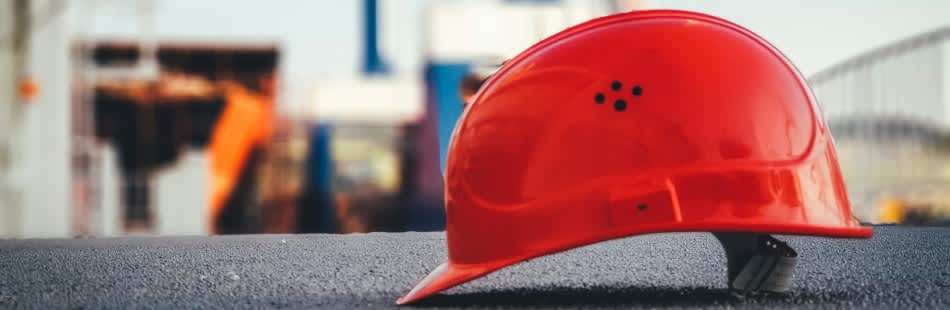
Doing a PhD may come with some stereotypes, like you’re avoiding the real world or you’re too theoretical to know practical skills. Neither is true!
I’m doing a PhD in Disaster Science, which cannot be studied solely in a lab or library! My research has taken me to historical places and led me to fully embrace the needs of people and their communities. It has required me to become an interdisciplinary researcher, applying knowledge from engineering, social sciences, environmental studies, languages and more to produce practical solutions to real-world problems.
What does a day in the life of a disaster researcher look like? Well, no day is the same.
I spent significant time over the last year doing various bits of admin like a giant ethics application, countless risk assessments and liaising with insurance and grants teams. I also attended scientific events, sat on panel discussions and had dinners with potential funders. I published three papers and shared their content in blog posts and magazines to help people find my research more easily. It’s been a mixed bag and I’ve loved that!
In the field, there has been far more variability in terms of how I spend my time. Unlike admin days, I’m not glued to a computer. Instead, I’m constantly observing what is happening around me. I could be hiking to a remote area to properly understand it’s topography, climbing hard engineering structures to see how they function or talking to research participants across local areas. I focus a lot on real-time data collection through photographs, recorded interviews and quick field notes.
Working with people means you must be considerate of your own position as a researcher. Are you being safe? How is the study affecting you and others? Are there any biases you’re bringing with you? You must adjust how you approach the research based on local insights. For instance, as part of getting to know project partners in Japan, I often visited hot springs with them and sat on tatami mats while eating. Understanding these cultural norms helped me strengthen relationships, maximising my limited fieldwork time and supporting my research.
Disaster research has a broader impact as well. By exploring ideas that were previously unclear, and providing credible evidence, we can create pressure to develop policies and actions that address these issues. For example, my research has already shown how children have the capacity to engage with disaster preparedness and how evacuation can be made easier with the use of social data. Beyond this, research can ultimately aid individual learning journeys increasing the chances of survival in emergencies.
PhD research is all about walking into uncertainty and trying your best to find the light. If something does not work, instead of giving up, ask ‘why?’
You will face failure and loneliness on this journey but these are opportunities for introspection and growth. As part of the PhD learning process at University College London, you undergo an upgrade where you share a glimpse of all the amazing work you’ve been doing so far. It is a wonderful opportunity to share your literature review, methodological grounding and all the fantastic bits you collated from archives and benefactors. This experience serves to frame your PhD — what you’ve already done, what’s still due and where you’re going with your research.
A PhD is also an opportunity to learn new skills. I’ve also been learning Japanese during my PhD. My research has been based in Japan and taking the time to learn the language has made me better equipped to lead research there. I feel a deep sense of affection towards Japan and I feel I’ve been able to bring a small, but important, essence back to the UK.
The beauty of my research is that it is multifaceted. There are so many opportunities to engage with different disciplines, from engineering to mathematics, social sciences and education. I’ve gained new skills and knowledge as a natural part of this research process. I’ve got some exciting things coming up: I’m in the final stages of publishing a fourth paper, waiting on the outcome of an external funding application and looking forward to starting fieldwork in Scotland.
I love this PhD because it reminds me that in times of crisis, we can be fragile but show endless capacity to care.
Maciej Pawlik is studying a PhD in nature-based disaster resilience at UCL's Department of Risk and Disaster Reduction and Institute of Education. His research aims to better understand learning processes surrounding nature-based solutions in flood-prone communities to build learning interventions that can help foster disaster resilience across the UK, Japan and beyond. He also serves as a Climate Ambassador for London and is the Green Party’s Spokesperson for Science.
 Continue with Facebook


Welcome to our PhDiary! To kick this series off, Hannah reminisces about her first week as a History PhD student. From the fiery flames of stress to the warm moments of success, hopefully her story can offer some insight and solace.
Read more
Tackling PhD burnout head-on! Get actionable tips from our expert for maintaining your mental health and staying motivated throughout your doctoral journey.
Read more

Thinking of self-funding a PhD? It's important to know what you'll actually have to pay for and to spare a thought for how you'll do so.
Read more

Three months into a new postdoc, Holly talks about the many ways in which her new role has (pleasantly!) surprised her.
Read more

or
Continue with Facebook