

or
 Continue with Facebook
Looking to list your PhD opportunities? Log in here.
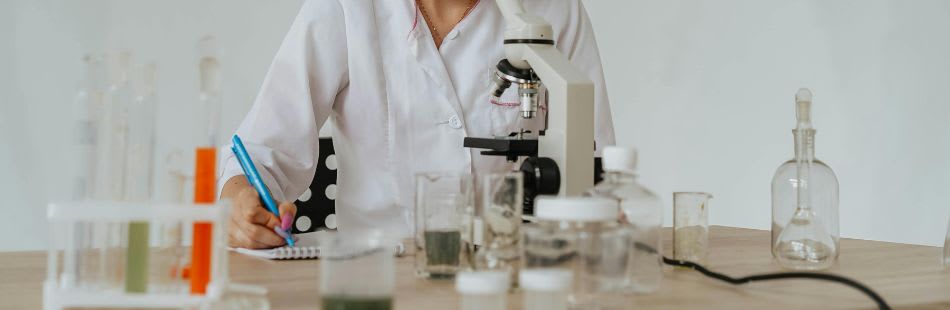
Many people assume that opting for Arts/Humanities at an early level closes off the possibility of becoming a scientist later. As a history graduate now undertaking a PhD in Biosciences, I am proof that these possibilities very much remain open.
I was bitten by the science bug in my late twenties, but didn’t immediately think I could make a career out of it. Why? Because public libraries exist but public laboratories generally do not. Science might therefore be considered fundamentally more difficult to self-teach (with the important caveat that by no means is all science is lab-based). A second Bachelors degree wasn’t an option for me and it felt impossible to get my foot in the door with no money and no experience.
But, there are many ways into science, and many scientists have taken unconventional routes to get there. I ended up enrolling on an interdisciplinary MSc course which combined aspects of the social and natural sciences and did not require any prior science qualifications.
My interests began to drift towards soil ecology, and I knew this would be difficult to pursue without any lab experience. However, my MSc institution had no facilities for lab-work. I supplemented it with a standalone Open University module called ‘Investigative Approaches in Biology and Chemistry’. This gave me a good foundation in the basics of laboratory-based science. Although mostly online, there was an optional three-day, in-person ‘lab school’ where we were able to gain some hands-on experience. I would highly recommend taking similar modules to anyone seeking a way into science. Though not exactly cheap, it was far less costly than taking a whole second degree.
Applying for PhD studentships in Biosciences and Environmental Sciences felt slightly audacious at the time. All the projects I was interested in needed some lab-work. I hadn’t been on the Open University module yet so I had no lab experience at all.
I panicked and, when I was invited to an interview to present my previous research, I withdrew an application altogether. I didn’t feel I’d done anything worthy of presenting to proper scientists.
Fortunately, I hadn’t withdrawn from all of them! When it came to the final interview for the project I ultimately got, it turned out I had plenty to say. I touched upon my understanding of the links between humanities and sciences, the transferrable skills I had (writing is just as important in the sciences), and the drive and commitment I showed switching to a new subject relatively late in life.
In hindsight, the lack of lab experience was less of an obstacle in reality than it seemed. Technical skills can easily be picked up along the way; the more important thing is being able to think scientifically.
Initially I had the impression that I would always lack the foundation that a BSc would have given me. However, I am rapidly realising that I can learn as I go. People can be experts in their own narrow area and still need to refresh and relearn elementary information.
One year into my PhD, I sometimes still feel like an imposter. Perhaps the simplest and best thing about being an ‘imposter’ is that I have bags of enthusiasm. Switching subjects is a challenge, but it’s also great fun.

Search PhD degrees on our website to find one that is right for you
 Continue with Facebook

Welcome to our PhDiary! To kick this series off, Hannah reminisces about her first week as a History PhD student. From the fiery flames of stress to the warm moments of success, hopefully her story can offer some insight and solace.
Read more
Tackling PhD burnout head-on! Get actionable tips from our expert for maintaining your mental health and staying motivated throughout your doctoral journey.
Read more

Thinking of self-funding a PhD? It's important to know what you'll actually have to pay for and to spare a thought for how you'll do so.
Read more

Three months into a new postdoc, Holly talks about the many ways in which her new role has (pleasantly!) surprised her.
Read more
Holly shares five lessons from the first two months of her new postdoc.
Read more
What's the first thing you would do once you hit submit? Holly's nearing the end of her PhD and this is what's on her bucket list!
Read more

or
Continue with Facebook