

or
 Continue with Facebook
Looking to list your PhD opportunities? Log in here.
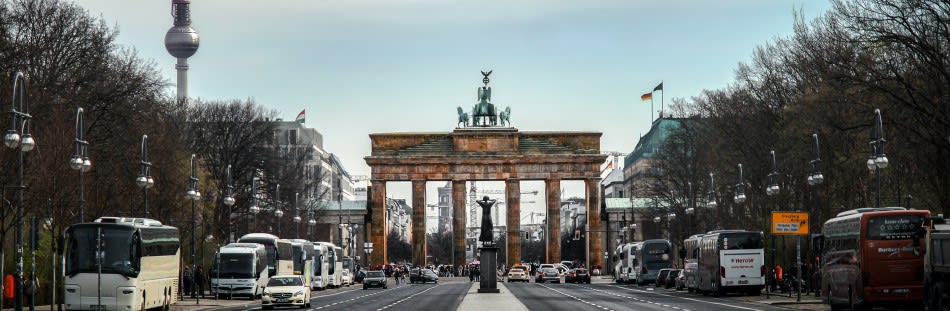
It’s not hard to figure out why Germany is one of the world’s most popular study abroad destinations. It boasts more globally ranked universities than any other non-English speaking country, generous post-study work opportunities, and, best of all, no tuition fees for postgrad students.
According to UNESCO over 28,000 Indian students were enrolled at German universities in 2021-22, a number that is only expected to rise.
If you’re looking to join them, this is the blog for you! We’ve put together a handy checklist of everything Indian students need to know about doing a PhD in Germany, including applications, costs, visas and more.
If you’re already eager to begin your PhD search, you can browse German PhD projects in our programme finder.
There are two types of higher education institution in Germany that award PhDs – universities (Universität) and research institutes.
German universities include both research universities, which conduct research across a broad range of subjects, and technical universities, which specialise in Science, Technology and Engineering.
Research institutes are independent organisations that carry out research projects in collaboration with universities and businesses.
You won’t find research institutes in any league table, simply because they aren’t technically universities and don’t carry out undergraduate teaching. But this is no reflection on the quality of their PhD projects! Some of Germany’s most important research is conducted by non-university research networks such as the Max Planck Society.
It’s important to note that there are also 240 Universities of Applied Sciences (Fachhochschulen) in Germany. Despite the confusing terminology, these largely focus on vocational training and do not award doctorates.
Any German PhD project will involve conducting an independent research project and writing up a thesis which you’ll defend in oral exam. However, there are two different varieties of programme on offer:
If you’re applying for a traditional PhD, you’ll need to find a supervisor before submitting your application. Those applying for a structured PhD can apply straight to their chosen university or institute.
You’ll usually need the following documents:
If applying for a structured PhD, you may need to attend a (usually remote) interview with the supervisory board. Traditional PhD applicants will sometimes be invited to an informal interview with their prospective supervisor.
If you're an Indian student planning to pursue a PhD in Germany, obtaining an APS certificate is a crucial first step. The Akademische Prüfstelle (APS) is a joint initiative by the German Embassy and the DAAD (German Academic Exchange Service). It verifies that your academic qualifications meet German university standards and confirms that your documents are authentic.
Introduced in India in 2022, the APS process is now a mandatory part of the German student visa application for most Indian applicants. Without this certificate, your university application may not be processed. Processing times range from 4 weeks to 3 months, and fees vary between €225 and €334.
However, not every applicant needs one. Exemptions include:
Always check with the German Embassy or APS India office to confirm whether you need the certificate based on your background.
Getting your APS certificate early helps avoid delays in your PhD application or student visa process, making it an essential step in your study abroad journey.
Here’s the part you’ve been waiting for – PhDs are free at public German universities for students of all nationalities.
There’s just one catch: free tuition is only guaranteed for up to 3 years (or 6 semesters) of PhD study. If your project takes longer than this, you may have to pay fees.
Ok, there is one more condition (last one, we promise) – you will have to pay a semester contribution of €100-350 (INR 8,050-28,170) to cover various administrative and student service costs. But compared to the hefty PhD tuition fees charged in many other countries, this shouldn’t make too much of dent in your wallet!
Despite low tuition costs, you’ll still need to cover your living expenses. Luckily, there are a huge range of funding options for PhD students in Germany. Support is available from research institutes, non-profit organisations, universities, the government and (occasionally) industry partners.
Here are a few examples of funding opportunities available to Indian PhD students in Germany:
You can find out more in our full guide to PhD funding in Germany.
Indian students must obtain a student visa in order to study in Germany.
It costs €75 (INR 6,300) to apply for a German student visa. You’ll need to complete an application form, and schedule an appointment at your nearest German consulate or application centre. Check the German Missions in India website for a full list of required documents.
In certain circumstances, postgraduate students can apply directly to the German Missions’ service provider, meaning they can skip the wait time for an interview slot. More information about eligibility can be found on the German Missions in India website.
There are two types of student visa:
Within three months of arriving in Germany, you’ll need to apply for a residence permit at your local Alien Registration Office.
As of June 2022, all Covid-19-related arrival policies in Germany have been lifted – so you won’t need a negative test result or proof of vaccination to enter the country.
The German government recommends that students budget approximately €867 (INR 70,220) per month for living costs.
Accommodation options include university halls of residence, shared flats, known in German as Wohngemeinschaften, and private rented accommodation. Depending on the type of accommodation you choose and its location, rent can be between €246-595 (INR 19,920-48,190) per month.
Indian PhD graduates in Germany can apply for a Job Seeker’s visa, which is valid for up to 18 months after the end of your programme. You’ll need to use this time to find a job that is relevant to your qualification.
Once you’ve been offered a job, you can apply for a work visa. If your job pays €56,400 (INR 45 Lakh) or more, you’re eligible to apply for a Blue EU Card, which allows you to work in any EU country.
Read more about working in Germany after your PhD.
Ready to begin your German PhD journey? Check out some of the German doctoral projects we list on FindAPhD.com or read our full guide to PhD study in Germany.

This guide tells you all about everything you need to apply for a PhD programme in Germany.
Read more
There are no fees for PhD study at most German universities and funding is available from a range of government agencies, research societies and other organisations.
Read more
Want to study a PhD in Ireland? This guide gives a detailed introduction to the kind of visa you need to study in Ireland and how to apply for it.
Read more
Everything you need to know about part-time and full-time work in Germany as a student or recent graduate in Germany.
Read more
What's it like to live in Germany during a PhD? Our guide covers accommodation, student living costs, working and other key information.
Read more
Have a question about studying in Germany? Check if we've answered it in our detailed FAQ, covering fees, funding, accommodation, applications and more.
Read more

or
Continue with Facebook